
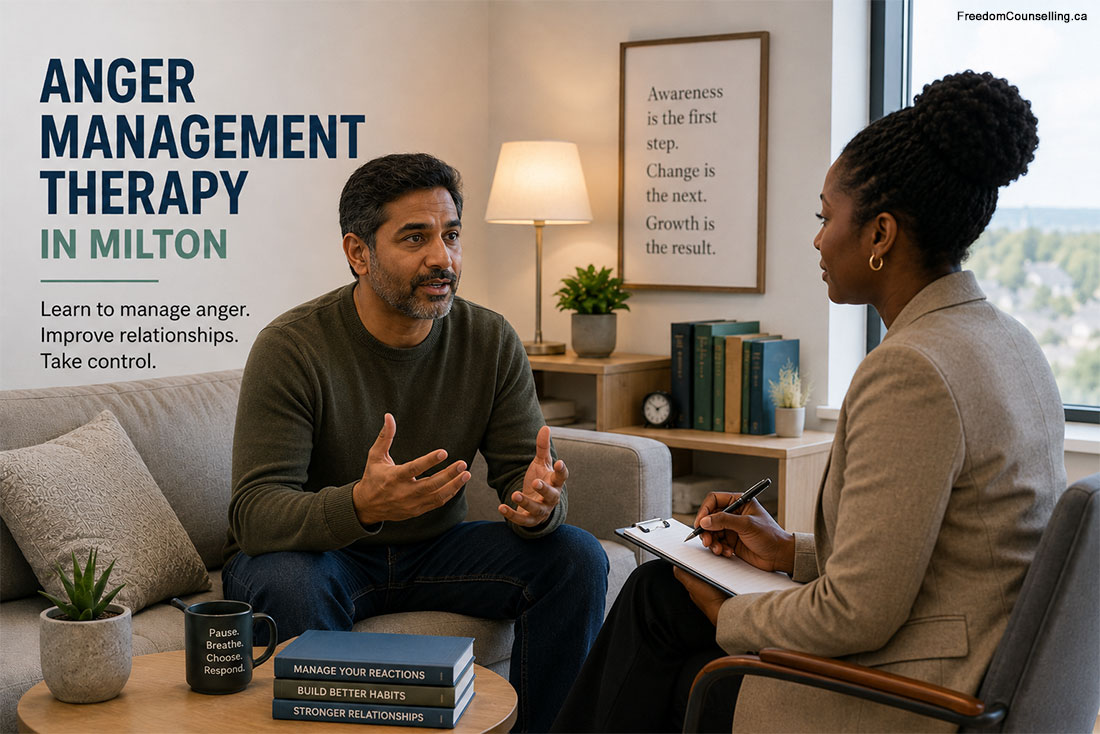
Anger management therapy in Milton helps individuals manage anger which is a normal human emotion.
It can tell you when something feels unfair.
It can show you when a boundary has been crossed.
It can also become difficult when it feels too intense, too frequent, or too hard to control.
For some people, anger shows up as yelling, arguing, shutting down, sarcasm, resentment, road rage, or saying things they later regret.
For others, anger stays inside and turns into stress, anxiety, depression, shame, or emotional distance.
Anger management therapy in Milton gives people a confidential place to understand their anger patterns, build healthier coping tools, and respond to conflict with more control.
It is not about never feeling angry.
It is about learning what to do with anger before it damages your relationships, work, confidence, or wellbeing.
Quick Answer
Anger management therapy helps people understand what triggers anger, what happens in the body during anger, and how to respond in healthier ways.
A Milton therapist can help with emotional regulation, communication, conflict management, boundaries, stress, anxiety, trauma, relationship issues, and patterns of anger that feel difficult to control.
Anger management counselling may help if anger is affecting your relationships, parenting, work, decision-making, or daily peace of mind.
When Anger Management Therapy in Milton May Help
Everyone gets angry sometimes.
That does not mean therapy is needed.
But support may be helpful when anger feels hard to manage or creates consequences you do not want.
You may benefit from anger counselling in Milton if you notice:
✓ Frequent arguments with a partner, family member, coworker, or friend
✓ Yelling, blaming, criticizing, or saying things you regret
✓ Shutting down, withdrawing, or refusing to communicate
✓ Feeling irritated or on edge most of the time
✓ Road rage or intense frustration in public situations
✓ Difficulty calming down after conflict
✓ Anger that feels stronger than the situation calls for
✓ Breaking objects, slamming doors, or acting aggressively
✓ Feeling guilty, ashamed, or embarrassed after angry reactions
✓ Loved ones saying they feel anxious around your reactions
You do not need to wait until anger causes a major consequence.
Counselling can help when you first notice that anger is affecting your life.
What Anger Can Look Like
Anger does not always look loud.
Some people express anger outwardly.
Others hold it in.
Both patterns can cause stress.
| Anger Pattern | What It May Look Like | How Therapy May Help |
|---|---|---|
| Explosive anger | Yelling, insults, threats, slamming doors, or intense reactions | Build pause skills and safer responses |
| Irritability | Feeling annoyed, impatient, or frustrated most days | Identify stressors and emotional triggers |
| Silent anger | Shutting down, withdrawing, or avoiding conversation | Improve communication and emotional expression |
| Resentment | Holding onto past hurts or feeling constantly wronged | Process unresolved emotions and boundaries |
| Passive anger | Sarcasm, avoidance, coldness, or indirect communication | Develop clearer and more honest communication |
| Anxiety-based anger | Reacting strongly when feeling overwhelmed or afraid | Learn grounding and nervous-system regulation |
| Trauma-related anger | Feeling triggered, defensive, or unsafe quickly | Build safety and trauma-informed coping tools |
| Shame-based anger | Becoming angry when feeling criticized or rejected | Understand self-protection patterns |
Anger is often the emotion people see on the surface.
Underneath, there may be hurt, fear, stress, grief, shame, rejection, exhaustion, or feeling powerless.
What Happens in a First Anger Management Session?
The first session is usually focused on understanding your anger patterns without judgment.
You do not need to defend every reaction.
You do not need to have the perfect explanation.
A therapist may ask about:
- What usually triggers your anger
- What happens in your body when anger rises
- How you usually respond during conflict
- What consequences anger has created
- Whether anxiety, depression, trauma, stress, or substance use may be involved
- What relationships have been affected
- What you want to change through therapy
The goal is not to label you as a bad person.
The goal is to understand the pattern clearly enough to begin changing it.
Anger Is Often a Secondary Emotion
Anger can be real and valid.
But it may also be covering something else.
For example:
| Surface Emotion | What May Be Underneath |
|---|---|
| Anger at a partner | Feeling unheard, rejected, afraid, or unimportant |
| Anger at work | Feeling disrespected, overwhelmed, or powerless |
| Anger while parenting | Feeling exhausted, stressed, or unsupported |
| Anger after criticism | Feeling ashamed, embarrassed, or attacked |
| Anger in traffic | Feeling rushed, unsafe, or out of control |
| Anger after betrayal | Feeling hurt, grief, mistrust, or fear |
Understanding what sits underneath anger does not excuse harmful behaviour.
But it can help you respond with more awareness and less automatic reaction.
CMHA Ontario notes that understanding where anger comes from and talking about feelings can help people make sense of anger and begin responding differently.
What Anger Management Therapy Can Help You Build
Anger therapy is practical.
It often focuses on what happens before, during, and after anger.
| Area | What You May Work On in Therapy |
|---|---|
| Trigger awareness | Noticing the situations, thoughts, or feelings that activate anger |
| Body awareness | Recognizing early warning signs like tension, heat, racing thoughts, or clenched muscles |
| Pause skills | Creating space before reacting |
| Communication | Learning how to express frustration without attacking or shutting down |
| Boundaries | Understanding what you need and how to state it clearly |
| Accountability | Taking responsibility for behaviour without collapsing into shame |
| Repair | Learning how to apologize, reconnect, and rebuild trust |
| Stress management | Reducing the pressure that makes anger easier to trigger |
The goal is not to become emotionless.
The goal is to feel anger without letting anger take over.
A Simple Anger Check-In
This is not a diagnosis.
It is a private way to reflect on whether anger management therapy in Milton may be helpful.
| Area | Ask Yourself |
|---|---|
| Frequency | Am I angry, irritated, or resentful more often than I want to be? |
| Intensity | Does my anger feel bigger than the situation in front of me? |
| Control | Do I struggle to pause once anger starts rising? |
| Relationships | Have people close to me said my anger affects them? |
| Regret | Do I often feel guilty or embarrassed after conflict? |
| Avoidance | Do people avoid hard conversations with me because of my reactions? |
| Stress | Does anger become worse when I am tired, overwhelmed, or anxious? |
| Safety | Have I scared someone, threatened someone, broken things, or acted aggressively? |
If anger has made another person feel unsafe, that should be taken seriously.
Support can help you make changes before more harm is done.
Anger and Relationships
Anger can damage connection quickly.
Even when the original concern is valid, the way anger is expressed can make it harder for someone else to listen.
This can create a cycle:
A person feels hurt.
They react with anger.
The other person becomes defensive or withdraws.
The original person feels even more ignored.
The anger grows.
Counselling can help interrupt that cycle.
You may work on:
✓ Speaking clearly instead of attacking
✓ Taking a break before conflict escalates
✓ Naming the real issue underneath anger
✓ Listening without preparing a comeback
✓ Repairing after hurtful words or behaviour
✓ Building boundaries instead of resentment
✓ Noticing when anger is becoming intimidation
Healthier communication does not mean avoiding conflict.
It means handling conflict in a way that keeps respect intact.
Anger, Anxiety, Depression, Trauma, and Addiction
Anger can overlap with other emotional challenges.
Someone with anxiety may become angry when they feel overwhelmed.
Someone with depression may feel irritable instead of sad.
Someone with trauma may become defensive when they feel unsafe.
Someone in addiction recovery may experience anger when cravings, shame, or stress become intense.
Anger management counselling may also support people navigating:
- Anxiety and panic
- Depression or low mood
- Trauma and PTSD symptoms
- Substance use or addiction recovery
- Relationship conflict
- Separation or divorce
- Parenting stress
- Workplace stress
- Low self-esteem or shame
A therapist can help identify whether anger is the main issue or part of a larger emotional pattern.
Anger Management Is Not the Same as Excusing Harm
Anger may be understandable.
But harmful behaviour still matters.
Yelling, intimidation, threats, controlling behaviour, violence, or making someone feel afraid should not be minimized.
If anger has become connected to fear, abuse, coercive control, or violence in a relationship, individual counselling and specialized support may be safer than couples counselling.
Canada provides family violence resources and helplines for people who may be experiencing abuse or who are worried about someone else.
Taking responsibility is not the same as hating yourself.
It means recognizing the impact of your behaviour and choosing to respond differently.
Practical Tools You May Learn
Anger management therapy may include tools that can be used in everyday life.
| Tool | How It Can Help |
|---|---|
| Time-out plan | Helps you step away before conflict escalates |
| Breathing and grounding | Reduces physical intensity in the body |
| Trigger tracking | Helps identify repeated anger patterns |
| Thought checking | Challenges assumptions that increase anger |
| Assertive communication | Helps express needs without attacking |
| Repair conversations | Supports accountability after conflict |
| Stress reduction | Lowers the baseline pressure that fuels anger |
| Boundary setting | Reduces resentment before it builds |
CAMH’s anger-management resources describe strategies such as meditation and learning to observe thoughts and feelings in the moment without judgment.
Small tools can make a large difference when they are practised consistently.
What Progress Can Look Like
Progress does not always mean never getting angry.
It may mean:
- Noticing anger earlier
- Taking a pause before reacting
- Lowering your voice during conflict
- Naming what you actually feel
- Leaving a conversation before it becomes harmful
- Apologizing without blaming
- Listening more carefully
- Asking for space instead of shutting down
- Reducing the frequency or intensity of arguments
- Feeling more in control of your reactions
These changes may seem small.
But they can improve trust, safety, and emotional stability over time.
When Anger May Need Urgent Support
Counselling can be helpful for anger management.
But it is not an emergency service.
If there is immediate danger, violence, threats, or risk of harm, call 9-1-1.
If you are in emotional crisis, thinking about suicide, or worried about someone else, call or text 9-8-8 in Canada for 24/7 crisis support. The 9-8-8 service also advises calling 9-1-1 right away if safety is at risk.
Finding an Anger Management Therapist in Milton
The right therapist in Milton should help you feel respected while also supporting accountability.
You should feel able to be honest about your reactions without being shamed.
When looking for anger management therapy in Milton, consider asking:
- Do you have experience supporting anger and emotional regulation?
- Can you help with relationship conflict or communication issues?
- Do you work with anger connected to anxiety, depression, trauma, or addiction recovery?
- What tools do you teach for managing anger in the moment?
- How do you support accountability without judgment?
- Do you offer secure virtual counselling for Milton residents?
The most important step is finding support that feels practical enough to begin.
Final Thoughts
Anger does not make you a bad person.
But repeated anger patterns can affect the people around you and the way you feel about yourself.
You can take responsibility without being defined by your worst reactions.
Anger management therapy in Milton can help you understand your triggers, calm your body, communicate more clearly, and make better choices during difficult moments.
Freedom Counselling provides supportive counselling for people navigating anger, anxiety, depression, trauma, addiction recovery, relationship stress, separation, and other personal challenges.
Frequently Asked Questions About Anger Management Therapy in Milton
What is anger management therapy?
Anger management therapy is counselling that helps people understand anger triggers, recognize early warning signs, manage emotional reactions, and communicate more effectively during conflict.
How do I know if I need anger counselling?
You may benefit from anger counselling if anger is affecting your relationships, parenting, work, communication, decision-making, or ability to feel calm and in control.
Can anger management therapy help with relationship conflict?
Yes. Therapy can help people communicate more clearly, reduce yelling or shutdown patterns, set healthier boundaries, and repair after conflict.
Can anger be connected to anxiety or depression?
Yes. Anger can overlap with anxiety, depression, trauma, stress, shame, or addiction recovery concerns. Therapy can help identify what may be underneath repeated anger patterns.
Is online anger management therapy available in Milton?
Many Ontario counsellors offer secure virtual counselling options. Online anger management therapy can be helpful for Milton residents who prefer privacy, flexibility, or support from home.
